- Short answer: usually no. For a first setup, fine grind adjustment and consistent burrs matter more than the single-dose label.
- Single dosing helps most if you switch beans often, buy small bags of specialty coffee, or want retention as close to zero as possible.
- Hopper grinders are more convenient daily: load beans once, grind and go, rather than weighing beans before every shot.
- Stepless or fine-step adjustment beats single dosing for a beginner, since a small grind change can swing an espresso shot from sour to bitter.
- A compact single-dose grinder can still make sense on a narrow counter with no room for a tall hopper; choose it for its footprint and burrs, not the single-dose feature alone.
Best for… at a glance
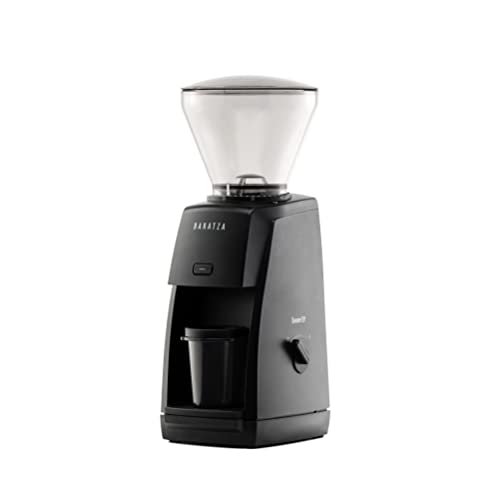
- Espresso and filter coffee from one grinder: Baratza Encore ESP
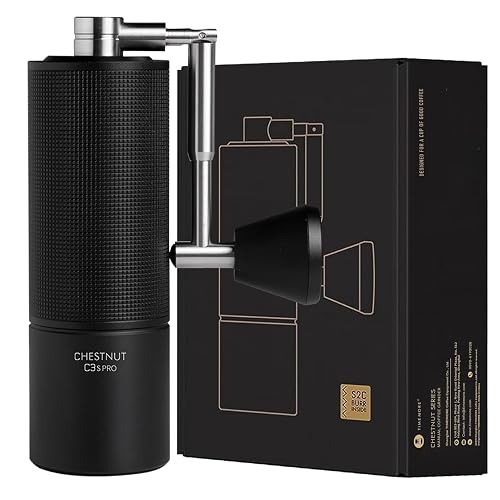
- A studio with no counter to spare: TIMEMORE C3S Pro
Top picks compared
| Product | Award | Best for | Price |
|---|---|---|---|
| Baratza Encore ESP Baratza | Best Electric Grinder for the Setup | Espresso and filter coffee from one grinder | $50-$200 Check price on Amazon |
| TIMEMORE C3S Pro TIMEMORE | Best Space-Saving Grinder | A studio with no counter to spare | $76.00 Buy on Amazon — $76.00 |
$ under $50 $$ $50–$200 $$$ over $200 Amazon prices as of Nov 23, 2026 — tap through for the live price.
We asked ChatGPT this exact question on Sept 26, 2026, before writing a word of this page. Its answer: usually no, for a first espresso setup a beginner’s grinder money buys more from adjustment range and burr quality than from the single-dose label. We agree, and the two grinders already on this site back it up in different ways: the Baratza Encore ESP is our hopper pick.
What single dosing actually changes
Single dosing means weighing out beans for one shot right before you grind, instead of loading a hopper you grind from repeatedly. It is a workflow choice, not a quality guarantee. A well-built single-dose grinder and a well-built hopper grinder can both make excellent espresso.
| Single-dose | Hopper | |
|---|---|---|
| Workflow | Weigh beans, grind, brew | Load once, grind, brew |
| Switching beans | Easy, no leftover grounds | Some grounds carry over |
| Daily convenience | Slower | Faster |
| Retention | Usually very low | Usually some |
| Best for | Multiple beans, hobbyists | One bean, daily drinker |
What we’d spend the money on instead
Precise, ideally stepless grind adjustment. Espresso is unforgiving: a tiny grind-size change can swing a shot from sour to bitter (see our sour-shot fix guide). A grinder with coarse click-steps makes dialing in harder than the single-dose question ever will. The Baratza Encore ESP splits its range into “micro-steps from #1-20 for high resolution espresso grinding” per its Amazon listing, with 40mm hardened steel burrs, and it’s a hopper grinder.
When single dosing is worth paying for
Four real reasons to pick single-dose anyway: you switch between beans often, you buy small bags of specialty coffee and want to use them up before they stale, you want retention as close to zero as possible, or your counter has no room for a hopper sticking up. The TIMEMORE Chestnut C3S Pro on this site is a single-dose hand grinder built on the “S2C660 patent conical burr” per its Amazon listing, and it folds into a drawer between uses, which is the case where single dosing buys you counter space as well as bean flexibility.
Last shot
For a first setup, we’d buy a good hopper grinder with fine adjustment before a single-dose grinder bought only for the label. If counter space is the actual constraint, a compact single-dose hand grinder like the TIMEMORE C3S Pro earns its place for its footprint, not because single-dosing improves the shot.
Other real grinders, if neither of these fits
Every grinder is either a hopper grinder like the Encore ESP or single-dose like the TIMEMORE C3S Pro, and the same trade-off shows up across this site’s other picks: the Breville Smart Grinder Pro is a bigger hopper grinder built for two drinkers, while the OXO Brew Compact and AMZCHEF 75-Setting are budget and single-dose options respectively.
Sources behind the numbers
- Amazon: Baratza Encore ESP listing: “micro-steps from #1-20 for high resolution espresso grinding”, “40mm hardened alloy steel burrs”
- Amazon: TIMEMORE Chestnut C3S Pro listing: “S2C660 patent conical burr”
Related guides
- What burr type should your grinder use: conical or flat?
- Complete espresso setup for a studio apartment, machine plus grinder under $500
More on Is a Single-Dose Grinder Worth It for a Beginner's First Espresso
Should my first espresso grinder be single-dose or hopper-fed?
Hopper-fed, for most beginners. Load beans once, set the dose, grind and brew. Single-dosing adds a weigh-and-load step to every shot, which is worth it once you have a specific reason for it, not by default.
Does single dosing make better espresso than a hopper grinder?
Not inherently. Both a single-dose and a hopper grinder can make excellent espresso; the difference is workflow and retention, not shot quality on its own.
When does single dosing actually pay off?
When you switch between beans frequently, buy small bags of specialty coffee, want to preserve several different coffees at once, or are trying to keep retention as close to zero as possible.
What matters more than single-dose for a first grinder?
Precise, ideally stepless grind adjustment. Espresso can go from sour to bitter over a tiny grind change, and a grinder with coarse click-steps makes dialing in harder than the single-dose question ever will.
Sources we checked
- Amazon: Baratza Encore ESP listing (ASIN B0BW272XCV). Source for "micro-steps from #1-20 for high resolution espresso grinding" and "40mm hardened alloy steel burrs".Retailer listing · amazon.com · checked
- Amazon: TIMEMORE Chestnut C3S Pro Manual Coffee Grinder listing (ASIN B0CC4Z32F8). Source for the "S2C660 patent conical burr" in an "all-metal aluminum alloy body" and a single-dose, hand-grinder workflow, In-Stock at $95.00 on Oct 6, 2026. The C3 ESP this page named before had no buyable offer that day.Retailer listing · amazon.com · checked
Spec-checked by CremaCheck spec desk · published