- Both burr shapes make excellent espresso. The choice is about flavor character, heat, noise and price, not a quality gap.
- Conical burrs tend to run cooler and quieter, and are generally more forgiving while dialing in a new grinder.
- Flat burrs tend to produce a cleaner, more separated flavor, which specialty light-roast drinkers often prefer, at the cost of more heat and noise.
- Burr quality and adjustment precision matter more than shape. A good 48-55mm conical with fine adjustment beats a mediocre large flat burr.
- Retention can be low on either shape; it depends more on the specific grinder's design than on conical vs flat.
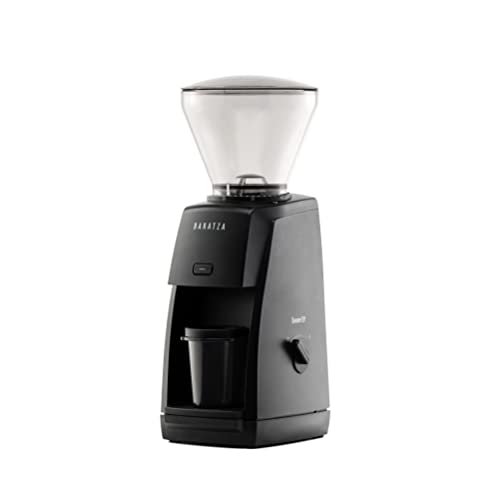
We asked ChatGPT this exact question on Sept 26, 2026 before writing this page. Its take, which matches what the two grinders already on this site show: neither burr shape is inherently better for espresso, and for a beginner the bigger lever is adjustment precision, not the conical-vs-flat label. The Baratza Encore ESP is one example built specifically for that fine adjustment. How its espresso-first adjustment range compares to the plain Encore’s shared scale is on the Encore ESP vs Encore page.
What are the practical differences between conical and flat burrs?
| Conical | Flat | |
|---|---|---|
| Espresso quality | Excellent | Excellent |
| Typical flavor | Fuller, more body | Cleaner, more separated |
| Heat / energy | Usually lower | Usually higher |
| Noise | Often quieter | Can be louder |
| Beginner-forgiving | Yes | Yes, but less so |
| Price | More affordable options | Increasingly affordable |
Neither column is “better.” Both burr shapes, built well, make excellent espresso; the difference shows up in flavor character, heat, noise and price, not in a quality gap.
Why would you pick a conical burr grinder first?
Good conical grinders are compact, quieter, and forgiving while you’re learning to dial in. Both grinders on this site use conical burrs: the TIMEMORE Chestnut C3 ESP lists “Burr size 38 mm” with “minor adjustment of 0.0233mm per click,” and the Baratza Encore ESP lists “40mm hardened alloy steel burrs” with espresso-specific micro-steps. That fine-step adjustment matters more day to day than the burr shape itself.
When do flat burrs earn their extra cost?
If you know you’re going to get seriously into light-roast specialty espresso, flat burrs are worth considering. The cleaner, more separated flavor profile they tend to produce suits those coffees, and the flat-burr accessory ecosystem gives more room to experiment as you go. For normal medium or medium-dark roast espresso, especially if cappuccinos and lattes are the daily drink, a quality conical grinder does the job without the extra heat and noise.
What actually matters more than burr shape?
Precise grind adjustment, consistent particle size, and low retention. A well-adjusted 48-55mm conical grinder is a better beginner purchase than a cheap 64mm flat-burr grinder. Espresso can swing from sour to bitter over a tiny grind change (see our sour-shot fix guide), so a grinder with coarse click-steps causes more trouble than the wrong burr shape ever will.
More conical-burr grinders on this site
Beyond the two grinders named above, the TIMEMORE C3S Pro is another conical-burr option at a different price point. If you need a machine to pair one with, the CASABREWS 3700 Essential and the De’Longhi Dedica Arte are both ranked on this site, neither with a built-in grinder.
Sources behind the numbers
- The TIMEMORE Chestnut C3 ESP and Baratza Encore ESP specs quoted above are sourced on this site’s studio setup comparison, where each listing is cited directly.
Related guides
- Is a single-dose grinder worth it for a beginner’s first setup?
- Quiet, low-retention single-dose espresso grinder under $250
Questions owners ask about Conical vs Flat Burrs
Is a flat-burr grinder better than a conical-burr grinder for espresso?
Not automatically. Both can make excellent espresso. Flat burrs tend toward a cleaner, more separated flavor profile that some specialty light-roast drinkers prefer; conical burrs tend to run cooler, quieter, and are generally more forgiving for a beginner.
Which burr type is quieter?
Conical burrs are often quieter and use less energy than flat burrs of a comparable size, though this varies by specific grinder design, not by shape alone.
Do I need flat burrs for light-roast coffee?
Not strictly, but many specialty light-roast drinkers prefer flat burrs for the cleaner, more separated cup they tend to produce. If you're only making everyday medium or medium-dark roast espresso, a quality conical grinder is an excellent choice.
What matters more than burr shape when buying a grinder?
Precise grind adjustment, consistent particle size, and low retention. A high-quality conical grinder with fine adjustment is a better beginner purchase than a mediocre flat-burr grinder bought for the label.
Spec-checked by CremaCheck spec desk · published